Blog Post
Inclusive teaching
The Same Behaviour, A Very Different Story
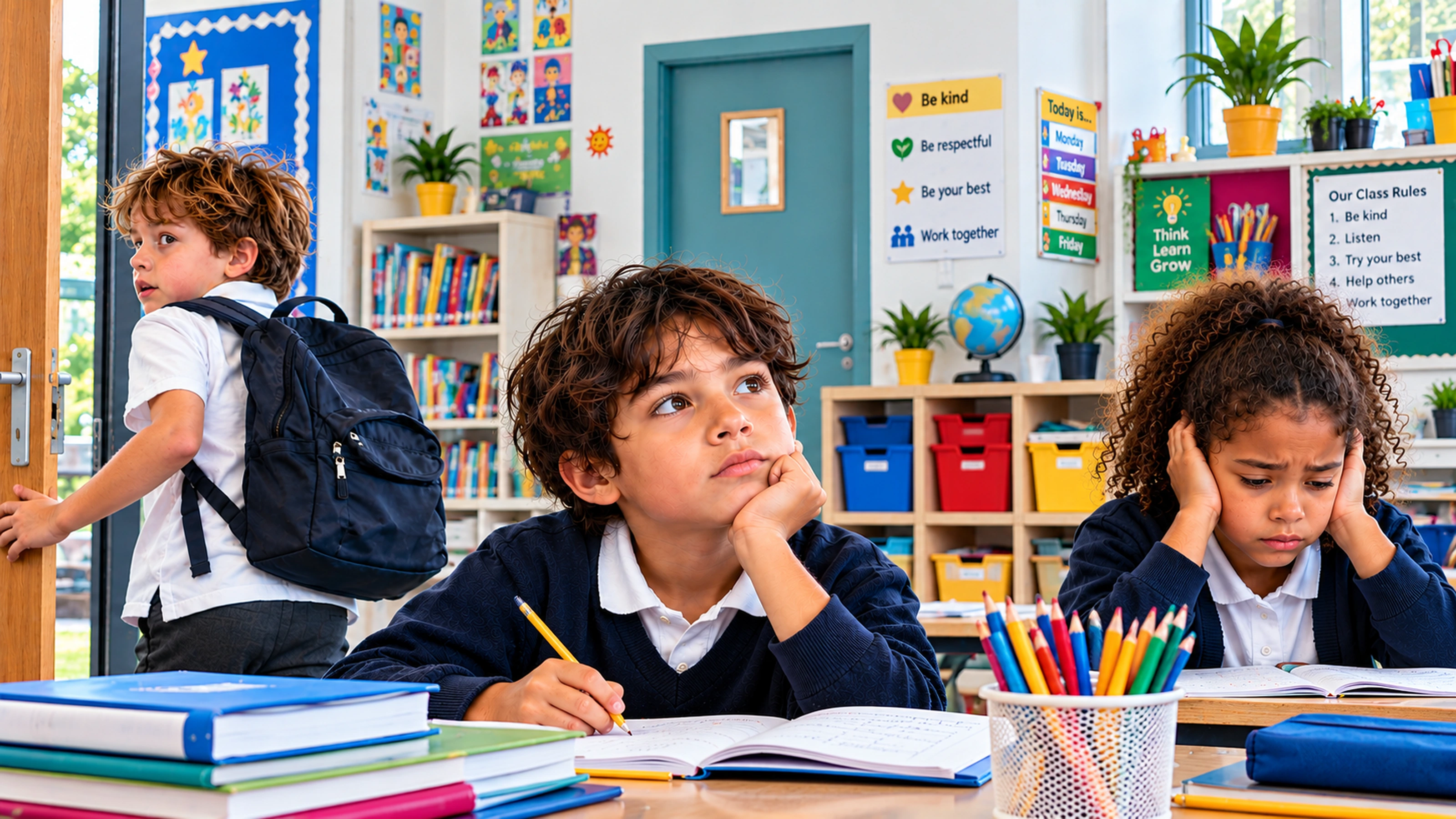
Two learners can display the same behaviour for very different reasons. Explore why understanding the needs behind behaviour is essential to providing meaningful, personalised support.
The support is in place. The strategies are being followed. So why does a learner sometimes continue to struggle?
Many educators will recognise the frustration of a situation that doesn’t improve as expected. A learner’s needs have been assessed, staff have agreed an approach, and everyone is working towards the same goals. Yet progress is inconsistent, and the same challenges keep surfacing.
It’s natural to assume something needs to change: a different strategy, a more intensive intervention, more resources. Sometimes that is exactly what’s needed. But sometimes the answer lies somewhere less obvious. The difficulty we’re responding to may be only one part of a much bigger picture.
Two Learners, One Behaviour
Consider two learners who regularly leave the classroom. From the outside, their behaviour looks almost identical. Both miss valuable learning opportunities, both need support to return, and both may have similar targets in their support plans.
Yet one may be struggling to process verbal instructions, becoming more overwhelmed as the lesson goes on. The other may understand the work perfectly well but find the social or sensory demands of the classroom hard to manage.
A similar response, but potentially very different needs.
Now consider a third learner who never leaves the classroom, rarely disrupts a lesson and appears to be coping. Could they be finding some of the same things difficult without showing it in ways that attract attention?
What we see doesn’t always tell us what a child is finding hard. And what we don’t see may matter just as much.
When Progress Tells Only Part of the Story
Schools work hard to identify needs, put strategies in place and monitor their impact. But progress isn’t always linear, and improvement in one area doesn’t mean every difficulty has been resolved.
A learner may develop stronger self-regulation but still find social interaction hard. Another may become more confident communicating their needs yet still be overwhelmed by certain learning demands. These aren’t necessarily signs that support is failing. They can show how different skills are developing, and where further support could make a difference.
The key may lie in understanding how different areas of development interact, rather than looking at each difficulty in isolation.
Cognition and learning, communication and interaction, social understanding, self-regulation and sensory experiences can all shape how a learner responds to the world around them. Looking beyond behaviour to a learner’s strengths and needs across these areas can reveal what might be happening.
Structured developmental assessments help build that understanding. Observations, family insights and the learner’s own perspective add valuable context. Together, they provide a stronger foundation for personalised support and meaningful progress monitoring.
What Does Success Really Look Like?
Imagine a learner who used to become overwhelmed during transitions and now moves between activities more confidently. That’s encouraging. But what has actually changed?
Perhaps they’ve developed greater emotional regulation, or they’re better able to anticipate what comes next. Perhaps communication has improved, or adjustments to the environment have reduced the demands on them. Understanding what has contributed to that progress helps educators recognise which approaches are making a difference and how they can build on them.
It also helps us notice achievements that might otherwise go unseen: a child recognising when they need help, communicating discomfort before becoming overwhelmed, or managing a social interaction that once felt impossible.
Sometimes the most meaningful progress isn’t the change everyone notices. It’s the change that becomes visible when we know what to look for.
What Is This Child Telling Us?
These are some of the questions we’ll explore in our free webinar, What is this child telling us?
Join Feliciea Jibson, Founder and CEO of PAGS, and Amanda Harling, SENCO at Grove Park School, as we work through three familiar classroom scenarios and look at how understanding the needs behind behaviour can lead to more effective, personalised support. Through practical discussion, we’ll consider different interpretations, explore supportive responses and share three practical ideas to take back to your setting.
Monday 2 November 2026 | 12:30-1:25pm UK time | Online |Free
Our first set of places filled, so we’ve opened more for those who’d still like to join us.
Reserve your free place here
When a learner continues to struggle despite our best efforts, perhaps the most valuable next step isn’t always to do more. Sometimes, it’s to understand more.
About PAGS
PAGS is a pupil intelligence platform that helps schools understand every learner’s needs, plan effective support and show impact, all in one place.
Grounded in scientific research and validated by UCL Institute of Education, PAGS has been developed in collaboration with SENCOs, SEND headteachers, neurodiversity specialists and researchers.
Bringing together learner assessment, personalised targets, practical strategies, provision planning and progress tracking, PAGS helps educators identify learners’ strengths and barriers to learning, turning that understanding into support and capturing the small steps of progress that matter.
For more information, explore www.pagsprofile.com.