55% of suspensions and 49% of exclusions are linked to disruptive behaviour.
Behavioural challenges are rarely about the behaviour itself. PAGS assessments uncover the developmental root causes, self-regulation, cognition, communication, before situations escalate to suspension or exclusion.
Behaviour is a signal, not the problem
Social, emotional and mental health development underpins behaviour in the classroom. PAGS assessments look past the behaviour to what's actually driving it.
PAGS doesn't stop at the behaviour. It assesses the seven developmental areas that sit underneath it, so the plan you build addresses the cause, not just the symptom.
Self-Regulation and Cognition & Learning, assessed together
Two developmental assessments identify what's really driving disruptive behaviour, and what to do about it.
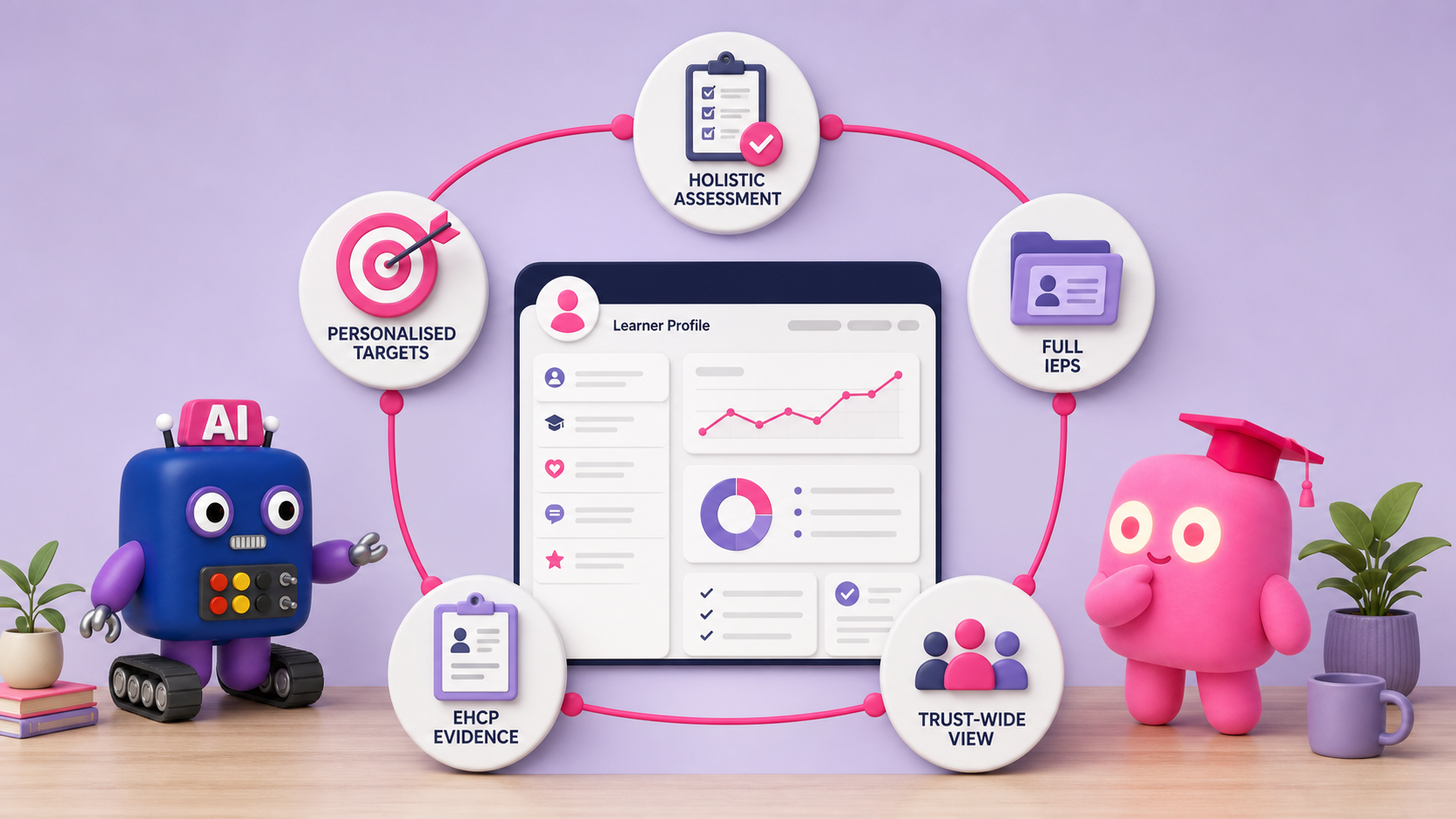
Running a specialist or alternative provision setting? PAGS supports SEMH-led assessment, planning and evidence at scale.
THE DIFFERENCE PAGS MAKES
Before the assessment. After the assessment.
The same learner, the same behaviour, a different starting point.

BEFORE PAGS
WITH PAGS
Behaviour logged as incidents, with no pattern visible
Behaviour connected to a developmental root cause
Interventions guessed at, one incident at a time
Targets and strategies matched to the actual need
Suspension or exclusion considered before the cause is understood
A support plan built before things escalate
Scramble to explain the pattern at review or inspection
A clear, evidenced developmental picture, ready any time
Difficult to justify funding or provision spend
Clear provision and impact evidence
What schools are seeing with PAGS
BETT 2025
Winner, Assessment Planning & Progress Monitoring
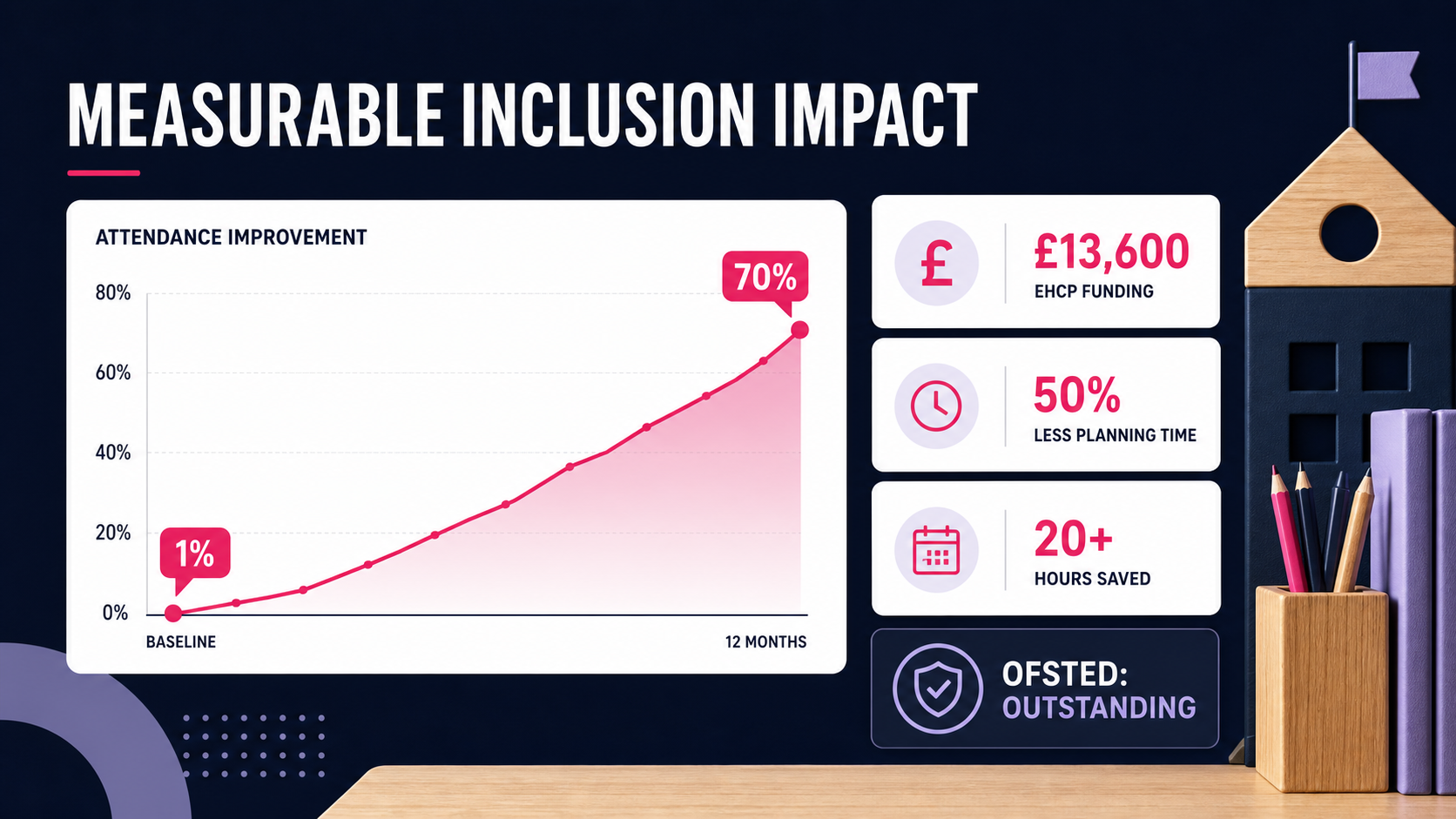
Stone Soup Academy achieved Ofsted Outstanding for the third consecutive time in June 2025. Attendance improved from 1% to 70% for targeted learners. An average of 7 qualifications per student, with the highest achieving 13.
Younes Henini · Principal, Stone Soup Academy
SENCOs, in their own words
“
Knowledge is power. PAGS creates a platform where you can gather quite a lot of knowledge, and the tools within the system help you use that knowledge to plan, prepare, and create.
Mandy Harling, SENCo, Grove Park School, Bourne Alliance MAT

“
PAGS has provided me with a more comprehensive overview of my learners and enabled me to draw from different resources. With PAGS I have everything I need all in one place, a dream really!
Rebecca Hale, SENCo, Esteem Valley Academy
Common questions about the Self-Regulation and Cognition & Learning assessments
How is this different from a behaviour log?
A behaviour log records what happened. The Self-Regulation and Cognition & Learning assessments identify why, across seven developmental areas, so the plan addresses the cause.
See the 7 areas of the Self-Regulation Assessment ↓See the 7 areas of the Self-Regulation Assessment ↓Does this replace our behaviour management system?
No. PAGS sits alongside your existing behaviour policy. It adds the developmental evidence for why a pattern is happening, so your response can be proactive, not just reactive.
Can this evidence support an EHCP application?
Yes. Assessment results, targets and intervention evidence carry straight through to IEPs and EHCP Application Packs.
How long does an assessment take?
A few minutes per learner. Results and suggested strategies are generated immediately.
THE SELF-REGULATION ASSESSMENT
Seven developmental areas, one assessment
A standalone breakdown of what the Self-Regulation Assessment actually measures.
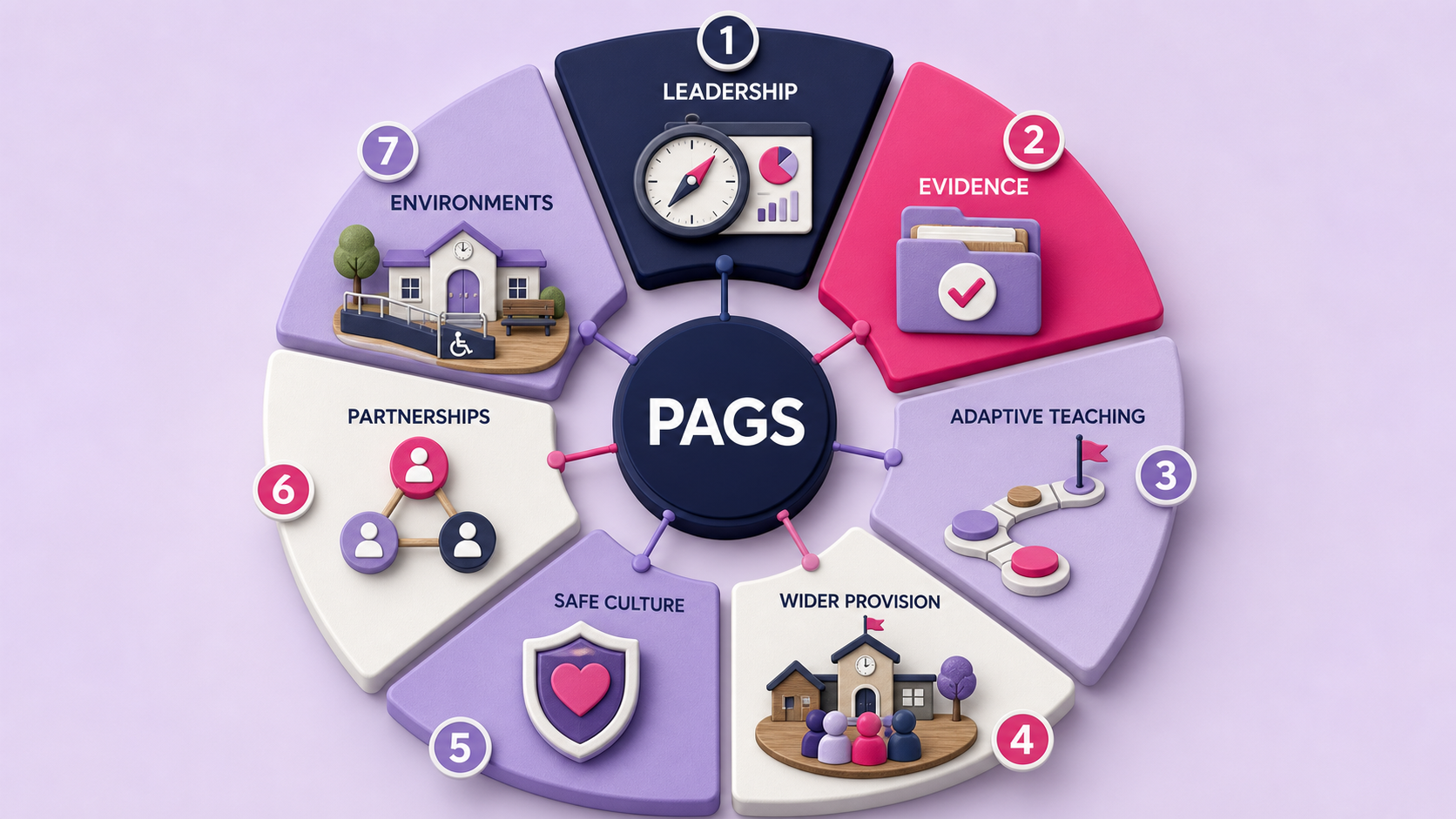
How a learner recognises, expresses and regulates emotional responses.
How a learner adjusts their behaviour to different settings, routines and expectations.
How a learner copes with pressure, and what triggers escalation.
How a learner responds to transitions, unexpected events and routine changes.
The physical factors, sleep, sensory needs, regulation, that shape a learner's capacity to self-regulate.
The emotional and mental health factors underlying day-to-day behaviour.
The overall picture: how a learner is doing, and where support is needed most.
Ready to understand what's really driving the behaviour?
Book a short, informal call to see how PAGS assesses the root causes of behaviour, before it escalates to suspension or exclusion.