Every learner, seen as a whole.
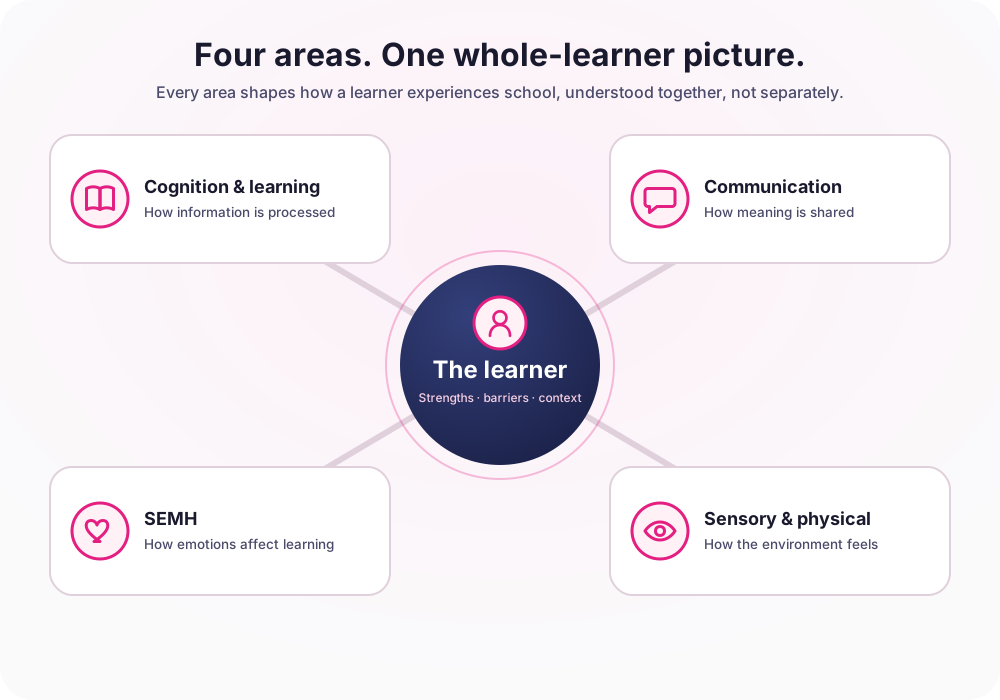
Four areas connect around one profile, so nothing is decided in isolation.
PAGS connects whole-school curriculum data with individual learner needs, so you can see which support is working, what it costs, and where resource should move next. Inspection-ready evidence, built as your team works.
Four areas connect around one profile, so nothing is decided in isolation.
Most schools quietly pay for several disconnected systems to do the work of one. PAGS consolidates the learner-support layer.
Four problems show up over and over in single-school leadership, every one of them is a structural information gap, not a people problem.
Your SENCO has deep knowledge of 60 learners. Your curriculum data shows cohort performance. They’ve never been in the same room. You triangulate between two systems and a corridor conversation.
An inspector asks about the quality of your SEND provision. The evidence is in spreadsheets, emails, and three different tools. You ask your SENCO to pull it together. It takes three days.
You’re spending money on interventions. Some are working. Some aren’t. You have a sense of which, but you can’t prove it, and you can’t redirect resource to the ones that work without a 30-minute meeting.
Your SENCO goes on maternity leave. Your new Year 3 teacher starts in September. The knowledge of 60 learners lives inside one person’s head, or in a system nobody else has opened.
The reason PAGS builds inspection-ready evidence is not because it generates reports. It’s because teachers, TAs, parents, and the SENCO all contribute to the same learner record through daily practice. Evidence doesn’t get assembled, it accumulates.
You open PAGS. They see a timestamped, attributed trail of assessments, targets, and progress notes going back three years. Built through daily use. You didn’t prepare for this, it was always ready.
In PAGS, you see that 68% of those learners have identified needs and current provision for Fractions is insufficient. You change the provision. You track the impact. The gap closes.
From day one they open PAGS and see every learner: targets, recent progress, Pupil Passport, what works in the classroom. No lengthy handover process required.
They click Generate. PAGS produces the complete application pack: Sections A–K, pre-populated. Average additional funding secured: £13,600 per school.
Attendance, SEN progress scores, provision spend, and cohort data, in one view. What you need before a governor meeting, a performance review, or a Monday morning briefing.
Year group and subject performance. Learner need filter. Which cohorts need intervention and why, before the end-of-year data is too late to act on.
Every intervention tracked with cost per learner and impact score. Your argument for the SEND budget, built by the system, not assembled in a spreadsheet the week before governors.
See which staff are logging in, which learners have active provision, and where adoption gaps are in your school. SLT-level visibility for driving whole-school engagement.
Integrated safeguarding and behaviour tracking, replacing standalone safeguarding and behaviour tools alongside the full SEND capability. One system for the whole child.
Stone Soup Academy achieved Ofsted Outstanding for the third consecutive time in June 2025. Attendance improved from 1% to 70% for targeted learners. An average of 7 qualifications per student, with the highest achieving 13.
Younes Henini · Principal, Stone Soup Academy
Three consecutive Ofsted Outstanding judgements
Average additional funding secured per school (UK EHCP). Because the evidence was already there when the application was due.
Validated by the UCL Institute of Education. Every assessment framework academically peer-reviewed.
Fulfils the Individual Support Plan framework introduced in the Every Child Achieving and Thriving white paper (February 2026). Built before the mandate.
Full platform from day one, every feature, every role, every learner. Same price whether you’ve got 120 pupils or 1,200.
UCL validated · GDPR compliant · Every Child Achieving and Thriving compliant · No IT project required
Before you book: PAGS shows you which pupils are falling behind, why, and what to do next.
UCL validated · 4 countries · From £1,450/year · GDPR compliant